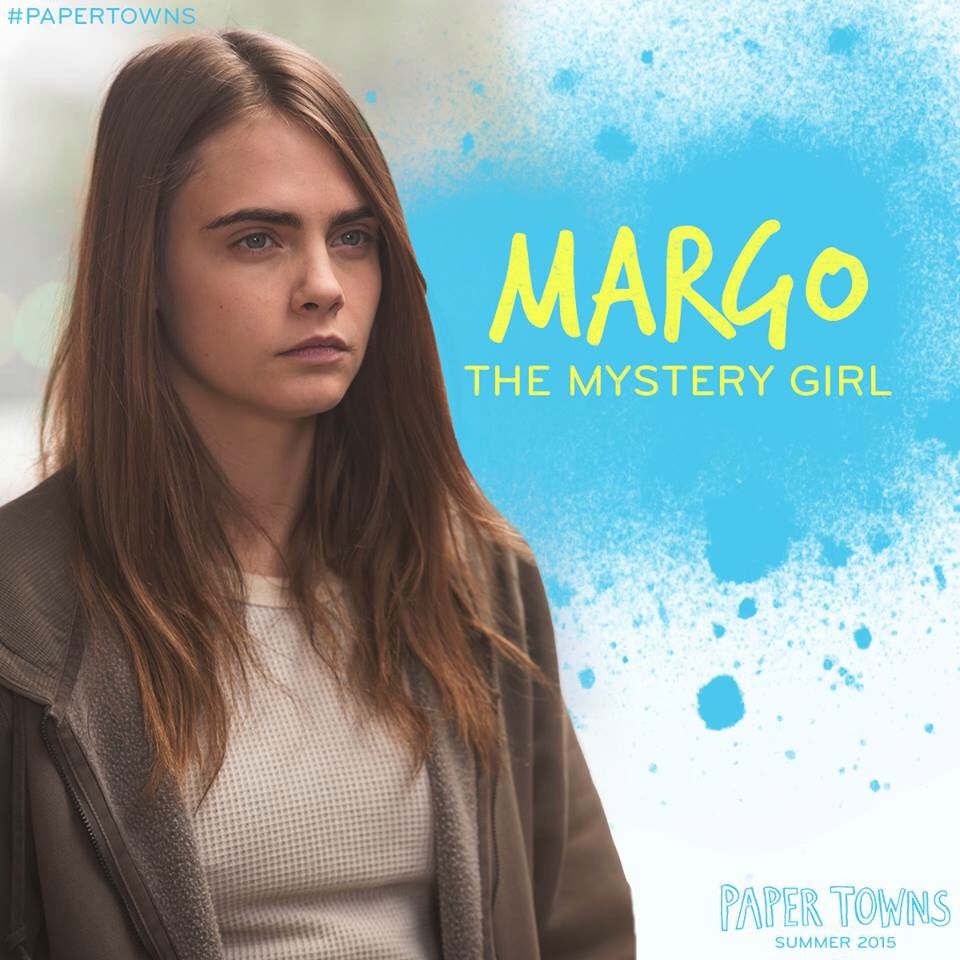
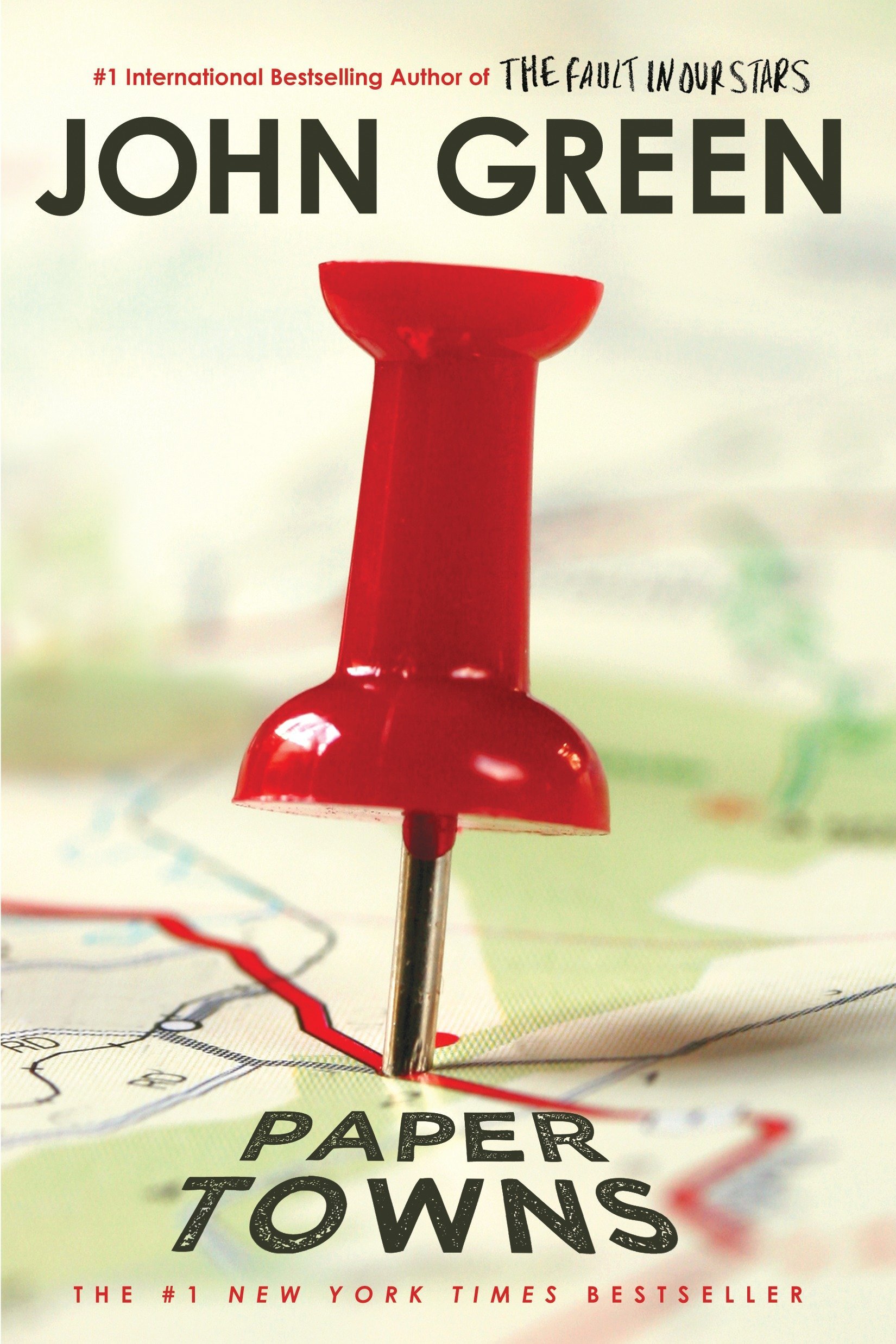
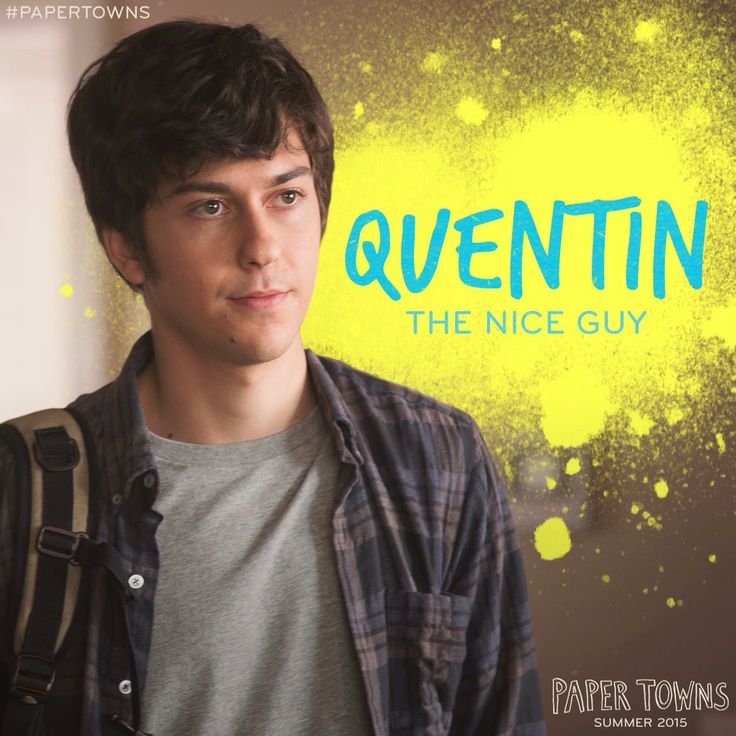
“Margo always loved mysteries. And in everything that came afterward, I could never stop thinking that maybe she loved mysteries so much that she became one.” (Green 8) John Green is a 41-year old famous author who has wrote many popular books among teens and young adults, his book Paper Towns was published in Boston on October 16, 2008. In Paper Towns, the main characters are Quentin Jacobsen, Margo Roth Spiegelman, Ben Starling, Radar, and Lacey Pemberton. This book is about a boy named Quentin Jacobsen who lives next door to Margo Roth Spiegelman and falls in love with her and continues to love her throughout his childhood and teen years. So it’s no surprise when she comes to his window one night in need of his help with some plans she has, that he agrees to offer his assistance, but the following day Margo is missing and trails clues around town for him to find her with. Quentin’s friends, Radar and Ben, and a friend of Margo joins the three on their search mission. I enjoyed reading this book because the characters and their own personalities appeal to me as a young adult in high school just like them, it has a different type of love story aside from the mainstream with an ending that is not expected, and the vocabulary is challenging but not too challenging that makes the reader want to stop reading.
Furthermore, the diverse personalities of all the characters is astounding. To be able to fit so many different personalities and personas in one book and plot is beyond intelligent. Quentin was always unconcerned about loving others because deep down his love for Margo was like a bird trapped within a small cage, so ready to be set lose but so scared of not being able to fly. “I mean I want to have fun and everything, but not at the expense, of, like, my future.” (Green 32) Quentin was always worried of the future, but never gave himself the opportunity to look at the now and live within it. With the lost of his love, Margo, he changes and grows up with a new insight on everything he goes through. Opposite of Quentin, Margo was a free spirit like a wild horse in a field. Margo took many chances, didn’t mind who was bothered by the process, and never worried for her future. On page 33 Margo says, “it amazes me you can find all of that shit even remotely interesting… college: getting in or not getting in. trouble: getting in or not getting in. school: getting A’s or getting D’s. career: having or not having. house: big or small, owning or renting. money: having or not having. It’s all so boring.” All of which very clearly indicates that she believes caring so much for something so far away is useless to her. As Margo adventures onto places she has admired for years she continues her careless, free moving life-style. Just one thing my heart yearns for is the mainstream happy ending between Margo and Quentin for their love to reignite within their future would make my heart whole.
Moreover, the lovely plot with its unexpected ending was perfectly executed within this book. It all began with Quentin falling in love with Margo after experiencing a traumatic event, with that love following him into his years of high school. Quentin’s last interaction with Margo was after they had come across a dead body together at the age of nine, but that was until one night their senior year when Margo appeared at his bedroom window in search for help. “‘Basically’ she said. ‘This is going to be the best night of your life.’” (Green 8) Margo had asked Quentin to use him and his car for eleven events she had to do throughout the night before the break of dawn. All of which took Quentin out of his comfort zone, but with his burning love for Margo being repressed for so many years he hesitantly jumped at the opportunity to be with her despite of her plans for the evening. After completing her events, the following day Margo had disappeared. However, Quentin was determined to find where she had went and found a trail of clues Margo head left behind for him. Quentin eventually had a group together of Radar, Ben, and Lacey to help his search for Margo. Although all participants didn’t believe the search party was necessary and that Margo was being overdramatic, Quentin persisted to find his long lost love. Quentin eventually follows the clues to an old abandoned barn, where he finds Margo sitting in it. Margo was upset that Quentin had searched for her and found her because she had only left the clues to let Quentin know that she was okay. Margo explains that she is going to leave for New York, but Quentin doesn’t like her choice and begs her to stay after admitting his love for her. However, soon after Q realizes that to love someone is to let them be happy. Quentin knows that his responsibilities and home life will keep him in Florida, but knows Margo is happy travelling. Quentin gives her up with a goodbye kiss as Margo promises to keep in contact with him.
Additionally the extensive vocabulary in this book is exemplary, it isn’t overbearing but throws a few trickier words in there. Some words that particularly stood out to me where; morosely, edict, ilk, soliloquy, brackish, demure, salacious, nonsensical, cacophonous, and obfuscation. “‘Radar is going to prom,’ he said morosely.” (Green 13) In this sentence morosely means in a sullen, moody manner. “…some cool kid laid down the edict that we were to be left alone.” (Green 17) Here edict means an authoritative statement. “I’d always figure it was Margo who had stopped Chuck Parson and his ilk from screwing with us.” (Green 28) Within this sentence, ilk means a type of person. “Margo managed to speak in her usual manic soliloquy without answering my question.” (Green 33) Here soliloquy means a speech you have made for yourself. “And I didn’t think about the alligators or the disgusting layer of brackish algae.” (Green 74) Brackish in this sentence means generally being slightly salty. “‘Yessir’ Margo said demurely…” (Green 77) Here in this sentence demure means shyly or modestfully playful. “…each more annoying and salacious than the last.” (Green 98) In this sentence salacious means suggestive and tending to moral looseness. “… it still turned into a jumble of nonsensical words.” (Green 162) Here nonsensical means it has no intelligible meaning. “ maybe she sat here in the cacophonous darkness and felt some kind of desperation take her over…” (Green 174) In this sentence, cacophonous means an unpleasant sound. “It was dishonest to act like Margo hadn’t participated in her own obfuscation.” (Green 207) Here the word obfuscation means confused.
Lastly, this book was a great book because of the independent personas each character had, its plot aside from every other book, and its enticing vocabulary. I recommend Paper Towns to young adults because it helps open your perspective on care for those around you and also teaches a lesson to not hide behind a public character people have perceived you through. Paper Towns also has a very teaching vocabulary for young adults who enjoy broadening their own vocabulary. However, some may not enjoy this book do to its vulgar language and conversations, on top of the plot and way the book is more of a mysterious romance. Some audiences may not enjoy the way things played out for the characters, or may not be happy with how some scenes go within the book. The book has successfully been recreated into a movie and made over 85 million in box office. In addition to box office, 89% of google users liked the movie and google has more than 2 billion users.
https://www.youtube.com/watch?v=1mUDw0sRZV0
Here is a video of the author himself, John Green, explaining where the inspiration for his book Paper Towns came from.
 Bianca's Blog